The Real Cost of Cheap Retouching: Why $0.20 Cutouts End Up Costing $5.00 in Brand Damage
Calculate the true Total Cost of Ownership of cheap photo editing: internal art director QA taxes, re-work fees, delayed drop dates, and customer returns.
IndustryPublished Sep 19, 20268 min readBy the Reframe Visuals editors
Key takeaways
- A $0.25 cutout routinely costs $5.00+ in Total Cost of Ownership when factoring in internal art director QA time, rework, and launch delays.
- Cheap vendors push uninspected files, forcing your $45/hour creative leads to waste 10+ hours per week acting as free quality testers.
- Uncalibrated monitors cause color shifts that inflate eCommerce return rates, a single returned order wipes out hundreds of dollars in cheap editing savings.
- Partnering with a dedicated production studio with 2-stage QA review and 24h guaranteed SLAs eliminates operational friction and protects brand prestige.
In creative procurement, low unit prices are tempting. When a freelance marketplace seller or offshore gig agency offers clipping paths and background removals for $0.20 or $0.30 per image, budget-conscious founders and finance leads often celebrate the apparent savings.
However, seasoned creative directors and eCommerce executives understand that price is not cost. In commercial photo editing, rock-bottom unit pricing is almost always subsidized by severe operational liabilities: missed delivery deadlines, uncalibrated monitor errors, jagged automated cutouts, and hidden administrative time taxes.
When the compound downstream impact of cheap retouching is calculated, that "$0.20 cutout" routinely ends up costing $4.00 to $8.00 per image in direct rework, internal friction, and lost revenue.
Here is the financial breakdown of why cheap photo editing is the most expensive mistake an eCommerce brand can make.
The 4 Hidden Costs of Cheap Retouching
┌────────────────────────────────────────────────────────────────────────┐
│ The True Cost Calculation of Cheap $0.25 Retouching:                  │
│ Direct Invoice Cost:                  $0.25                           │
│ + Internal Art Director QA Tax:       $2.15                           │
│ + Re-Edit / Secondary Vendor Fee:     $0.85                           │
│ + Delayed Launch Revenue Cost:        $1.40                           │
│ + Elevated Customer Return Risk:      $1.10                           │
│ = TRUE TOTAL COST OF OWNERSHIP:       $5.75 per image                 │
└────────────────────────────────────────────────────────────────────────┘
1. The Internal QA Review Tax (The Biggest Hidden Expense)
When an agency charges $0.25 per image, they cannot afford senior quality control inspectors. Instead, they push unfinished, uninspected drafts directly to the client.
- Your senior art director or creative lead earning $90,000 per year ($45/hour) must spend 10 to 15 hours per week opening every file, annotating errors, drawing revision circles, and managing email tickets.
- If a senior lead spends 12 hours checking a 500-image batch, that adds $540 in internal labor overhead, adding $1.08 per image to the invoice.
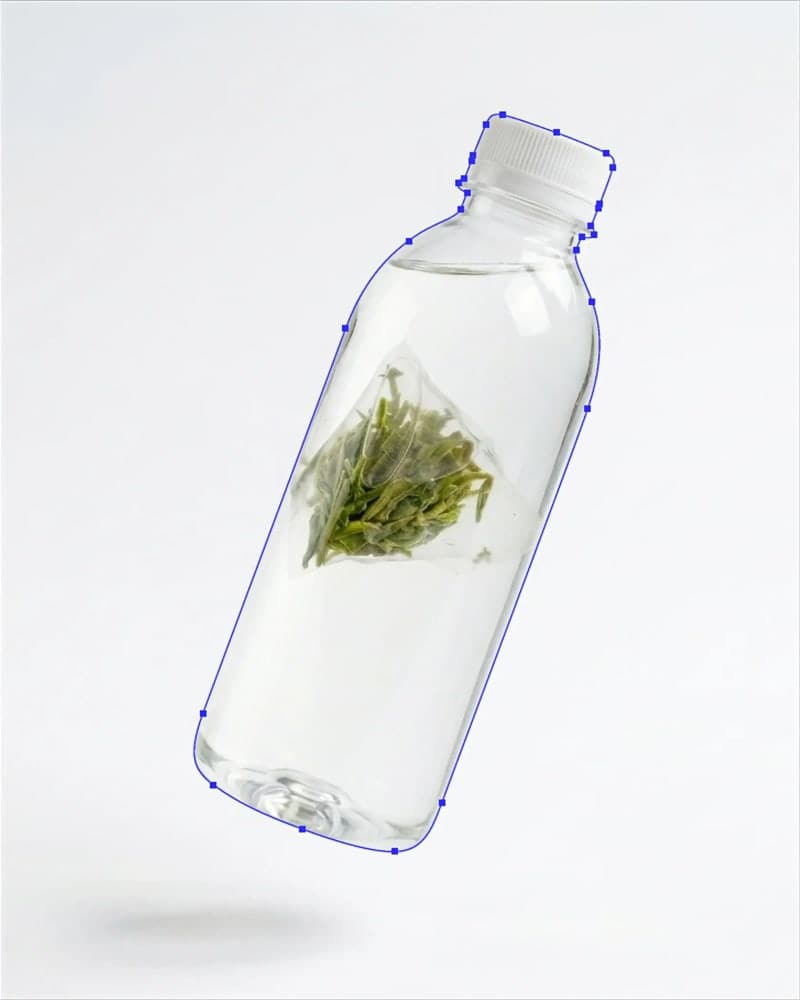
Clipping Path on your own images
Hand-drawn vector paths.
2. High Error & Re-Work Rates
Cheap vendors maintain daily quotas of 250+ images per editor. To hit these quotas, operators rely on automated magic wand shortcuts instead of hand-drawn clipping paths, magnetic lasso shortcuts, or unverified AI plugins.
- The Result: 25% to 40% of delivered files contain visible defects: clipped shoe eyelets, stepped pixelated curves, or dirty grey background artifacts (RGB 254).
- When deadlines hit, brands are forced to pay an emergency domestic studio rush fees to re-cut the rejected assets from scratch.
3. Delayed Product Launch & Lost Revenue Velocity
In seasonal fashion, footwear, and consumer electronics, launch timing is everything. Missing a scheduled Tuesday product drop by 72 hours due to vendor revision delays means:
- Email marketing campaigns must be rescheduled.
- Paid influencer partnerships and ad campaigns stall.
- Inventory sits idle in fulfillment warehouses incurring storage holding fees while competitors capture early-season search volume.
4. Elevated Customer Returns from Color Shifts
Cheap retouchers work on uncalibrated, low-gamut office monitors in uncontrolled ambient lighting environments. They eyeball color adjustments without calibrated color correction swatches without reference to spectrophotometer data, CIELAB standards, or physical fabric swatches.
- An apparel item that appears soft sage green on the retoucher’s uncalibrated screen ships to the customer as muddy olive.
- In fashion eCommerce, where average return handling costs $15 to $25 per returned order, a 3% increase in return rates wipes out annual post-production savings tenfold.
The Vendor Quality Comparison Matrix
| Quality Factor | $0.25 Offshore Gig Vendor | Enterprise Production Partner (Reframe) |
|---|---|---|
| Path Creation Method | Automated AI / Wand / Stepped Curves | 100% Hand-Drawn Pen Tool Bezier Paths |
| Edge Precision | 2–5 px sloppy variance | 0.5 px sub-pixel constant inset |
| Internal QA Review | None (client acts as free QA tester) | 2-Stage Senior Inspector Review on 100% of files |
| Turnaround Guarantee | "As soon as possible" (frequent delays) | 12h–72h turnaround chosen at checkout with 14-day refund protection |
| Color Fidelity | Uncalibrated visual guesswork | Numerical Lab matching to physical Pantone swatches |
| Revisions | Disputed, slow, or charged as extras | Unlimited, free, expedited revisions |
Discover how enterprise studios eliminate revision loops: see our photo editing outsourcing cost comparison or calculate your studio volume quote.
Smart brands do not shop for the cheapest invoice; they optimize for minimal total operational friction.
Partnering with an established studio like Reframe Visuals provides:
- Transparent rates starting from $0.39 to $1.80 per image.
- Predictable 12h–72h delivery chosen at checkout with full revision coverage.
- Two-stage human QA review that allows creative directors to approve batches in 5 minutes with complete confidence.
About this guide
Written by the Reframe Visuals editors. Last reviewed September 19, 2026. See how we check our work.
Questions answered
3 questions
Low-cost operators often use the Photoshop Magic Wand or Quick Selection tool with broad smoothing filters rather than hand-drawing individual Bezier anchor points with the Pen Tool. Under 200% zoom, these automated selections display stepped, stair-cased pixels that look amateur on modern Retina displays.
Send a test batch of 3 to 5 challenging images: a white sneaker on an off-white background, a piece of intricate jewelry, and an apparel item with fine fabric texture. Request delivery within their standard turnaround window and inspect edge smoothness under 300% magnification.
Reframe Visuals provides unlimited, free revisions on any delivered image that deviates from your visual style guide. Revisions are expedited through our priority queue and returned within same-day production windows.
No matching questions
Try a shorter keyword, or choose another category.