Photo Editing Outsourcing Cost Comparison Guide: In-House vs. Offshore vs. Dedicated Studio (2026)
Calculate the true Total Cost of Ownership of photo editing: in-house retoucher overhead vs gig platforms vs dedicated studio partners across 500 to 10,000+ monthly SKUs.
IndustryPublished Nov 2, 20269 min readBy the Reframe Visuals editors
Key takeaways
- Loaded in-house retouching costs range from $6.50 to $8.75 per image when factoring in salary, taxes, benefits, hardware, and idle capacity.
- Freelance gig platforms introduce severe quality variance, requiring 8–12 hours of internal art director QA per week that offsets surface savings.
- Dedicated production studios reduce per-image costs to $0.39–$1.80 with elastic capacity scaling from 100 to 10,000+ assets daily.
- Contractual SLAs should guarantee 24-hour delivery, free revisions on guideline deviations, and 0.5px hand-drawn vector bezier curve tolerance.
Every eCommerce brand and commercial photo studio eventually hits the post-production wall. When your catalog scales past 500 SKUs per month, editing product photos internally shifts from a manageable task to an operational bottleneck that halts marketing campaigns and delays product drops.
Deciding how to scale your image editing requires calculating the true Total Cost of Ownership (TCO) across three distinct production models: hiring in-house retouchers, managing gig freelancers, or partnering with a dedicated production studio.
The Three Photo Editing Operating Models
Before examining per-image rates, consider how each model handles production overhead, quality assurance, and throughput scaling:
| Factor | In-House Retoucher | Freelance Marketplaces (Upwork/Fiverr) | Dedicated Production Studio (Reframe) |
|---|---|---|---|
| Direct Unit Cost | $2.50 – $6.50 / image | $0.50 – $2.00 / image | $0.39 – $1.80 / image |
| Turnaround Predictability | Business hours only | Highly variable (1–5 days) | Guaranteed 24h SLA |
| Capacity Flexibility | Fixed (40–60 images/day) | Unreliable on short notice | Elastic (100 to 10,000+ images/day) |
| Management Burden | 10–15 hours / week | 8–12 hours / week | Under 1 hour / week |
| Quality Consistency | High (same individual) | Low (inconsistent styles) | High (strict QA and style guides) |
The Hidden Costs of In-House Retouching
Many creative directors assume an in-house Junior Retoucher earning $55,000 per year is cost-effective. However, the fully loaded cost of an internal employee includes:
- Payroll Taxes & Benefits: Adds 20% to 30% to base salary ($66,000 to $71,500 total).
- Software & Hardware Overhead: Adobe Creative Cloud enterprise licensing, color-calibrated EIZO or BenQ monitors, high-performance workstations, and local backup storage ($3,500/year).
- Productive Output Limitations: A diligent retoucher produces 35 to 50 complex multi-path images per 8-hour day. Accounting for PTO, sick leave, team meetings, and idle studio time between shoots, effective annual production rarely exceeds 8,000 finished images.
- Loaded Unit Cost: $70,000 ÷ 8,000 images = $8.75 per finished image.
When seasonal shoot volumes peak in Q3 and Q4, internal teams face mandatory overtime or missed product launch dates. During slow months, their fixed overhead continues regardless of volume.
Compare the real Total Cost of Ownership across photo editing outsourcing models.
Reframe provides transparent per-image rates for clipping path, background removal, and photo retouching. Benchmark our quality with 3 free sample edits.
Background Removal on your own images
Clean, hair-accurate isolation.
The Time Tax of Freelance Marketplaces
Outsourcing to individual freelancers on gig platforms appears inexpensive at $0.50 to $1.00 per image. However, the operational friction quickly degrades margins:
- Vendor Churn: Freelancers take sick leave, accept higher-paying clients, or disappear during peak launch windows without notice.
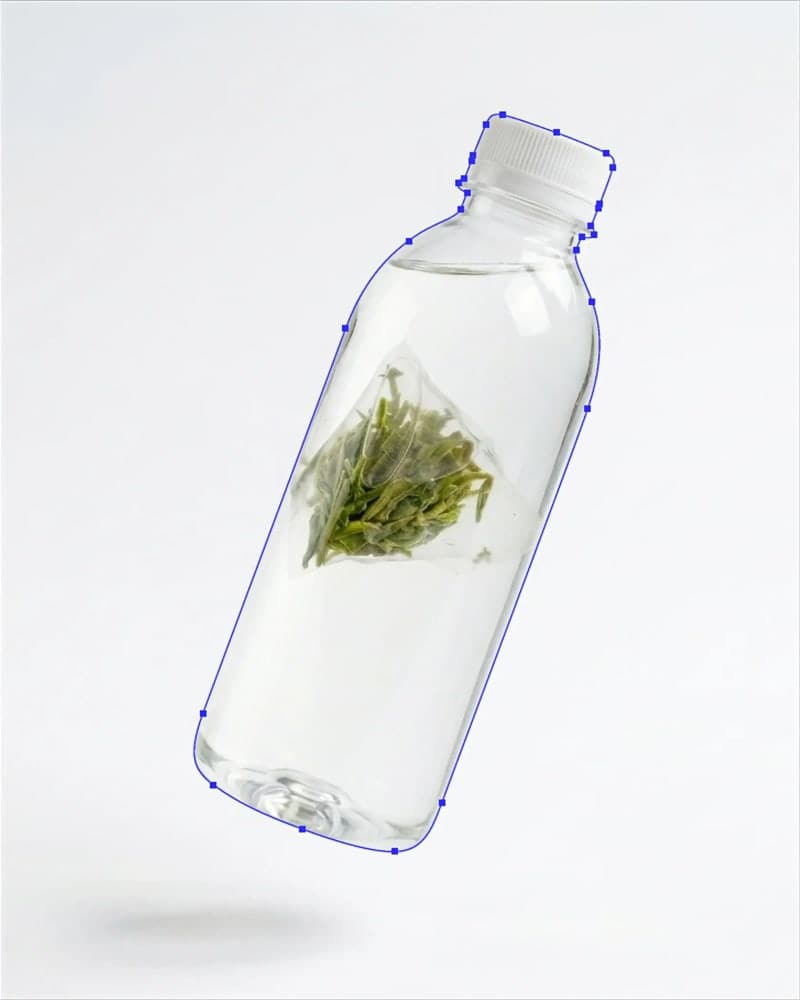
- Inconsistent Clipping Paths: Each freelancer uses different Pen Tool bezier tolerances, leading to jagged edges on some products and overly rounded corners on others.
- Internal Art Director QA: Senior creative leads spend 6 to 10 hours per week reviewing, annotating, and re-routing revisions, diverting time from brand strategy and creative development.
Financial Comparison Across Monthly SKU Volumes
Here is how total monthly costs compare across varying production volumes:
| Monthly Volume | In-House Staff (Loaded) | Freelance Platforms | Dedicated Production Partner | Annual Savings with Dedicated Partner |
|---|---|---|---|---|
| 500 images/mo | $5,800 (1 part-time) | $650 + $900 QA time = $1,550 | $450 | $13,200 / year |
| 2,500 images/mo | $14,500 (2.5 FTEs) | $2,750 + $2,400 QA time = $5,150 | $1,850 | $151,800 / year |
| 10,000 images/mo | $52,000 (8+ FTEs) | Impossible to coordinate reliably | $6,200 | $549,600 / year |
Key Clauses to Demand in an Outsourcing SLA
When vetting an enterprise photo editing studio, insist on the following contractual guarantees:
- Turnaround Window: A strict 24-hour turnaround on standard daily batches, with optional 12-hour rush windows for time-sensitive releases.
- Revision Policy: Unlimited, free revisions on any asset that deviates from the approved visual brand guideline.
- Data Security & Confidentiality: Signed enterprise NDAs and secure encrypted file handoffs to protect unreleased product lines from leaking.
- Path Standards: Hand-drawn vector clipping paths saved as native 'Path 1' in PSD or TIFF files, maintaining 0.5px edge precision.
About this guide
Written by the Reframe Visuals editors. Last reviewed November 2, 2026. See how we check our work.
Questions answered
3 questions
Basic single-item clipping paths typically cost between $0.39 and $0.80 per image, depending on monthly volume. Complex items with transparent materials, jewelry, or bicycles range from $1.50 to $3.50 per image due to extensive anchor point counts.
Professional studios use calibrated spectrophotometer data, CIELAB color profiles, and Pantone digital color libraries. When RAW files and physical fabric swatches or RGB hex references are supplied, retouchers match color numerically rather than by eye.
Request 3 to 5 sample edits across your most complex SKUs (e.g., reflective metal, fine lace, or transparent glass). Evaluating turnaround speed, edge accuracy at 200% zoom, and communication responsiveness reveals whether the studio can handle production-level work.
No matching questions
Try a shorter keyword, or choose another category.