Evaluating Clipping Path Vendors: The Enterprise RFP Scorecard & Test Batch Protocol (2026)
A rigorous RFP evaluation framework and 5-point test batch protocol for creative directors and procurement teams selecting high-volume post-production partners.
IndustryPublished Jul 16, 20268 min readBy the Reframe Visuals editors
Key takeaways
- Never evaluate photo editing vendors on simple rectangular products, use a 5-image stress-test batch featuring hair, jewelry, glass, and mesh.
- Inspect clipping paths at 200% zoom: vector paths should maintain 0.5px edge inset with clean, sweeping Bezier curves and minimal nodes.
- Demand contractually guaranteed 24-hour turnaround SLAs with free revisions on guideline deviations and enterprise NDA protection.
- Reject vendors who rely on unverified AI clipping tools that leave fuzzy halos or fail on low-contrast product edges.
When an enterprise eCommerce brand, marketplace, or high-volume photo studio outsources post-production, selecting the wrong vendor is catastrophic. A vendor that promises $0.20 cutouts but misses delivery deadlines, delivers jagged pixelated edges, or leaks unreleased product imagery can cripple seasonal product launches and cost hundreds of thousands of dollars in emergency fixes.
Creative procurement teams need an objective, repeatable methodology to vet photo editing agencies.
Here is the comprehensive enterprise RFP Scorecard and 5-Point Test Batch Protocol used by leading brands to evaluate and select post-production partners.
The 4-Pillar Vendor Evaluation Framework
Before sending test images, evaluate candidate vendors across four operational pillars:
| Evaluation Pillar | What to Demand | Red Flags |
|---|---|---|
| 1. Technical Precision | 100% hand-drawn vector paths using Adobe Photoshop Pen Tool; 0.5px edge inset | Using automated AI plugins or 'magic wand' tools with fuzzy feathered edges |
| 2. Production Throughput & SLA | Contractually guaranteed 24h turnaround for standard daily batches (up to 5,000 files) | "We try our best" estimates without explicit contractual penalties for delays |
| 3. Data Security & IP Protection | Signed enterprise NDAs, SOC 2 compliance / encrypted SFTP transfers, strict employee device policies | Uploading client images to public cloud links or social portfolios without permission |
| 4. Commercial Terms & Flexibility | Transparent per-image pricing, dedicated account managers, multi-currency invoicing | Hidden setup fees, minimum monthly lock-in penalties, or complex credit token systems |
Evaluating clipping path vendors for high-volume catalog production?
Test our Pen Tool precision: 100% hand-drawn clipping paths, multi-clipping paths, and soft-edge image masking. Put our Pen Tool editors to the test with 3 free sample images.
The 5-Point Test Batch Protocol
Never evaluate a vendor on simple, symmetrical shapes like an iPhone box or a plain white coffee mug. Any basic automated tool can clip a rectangle.
Instead, assemble a 5-Image Stress-Test Batch representing real production challenges:
┌────────────────────────────────────────────────────────────────────────┐
│ The 5-Image Stress-Test Batch:                                         │
│ 1. Fine Hair & Fur (Soft edge masking vs. hard edge pathing)           │
│ 2. High-End Jewelry (Microscopic prongs, faceted gems, metal glares)   │
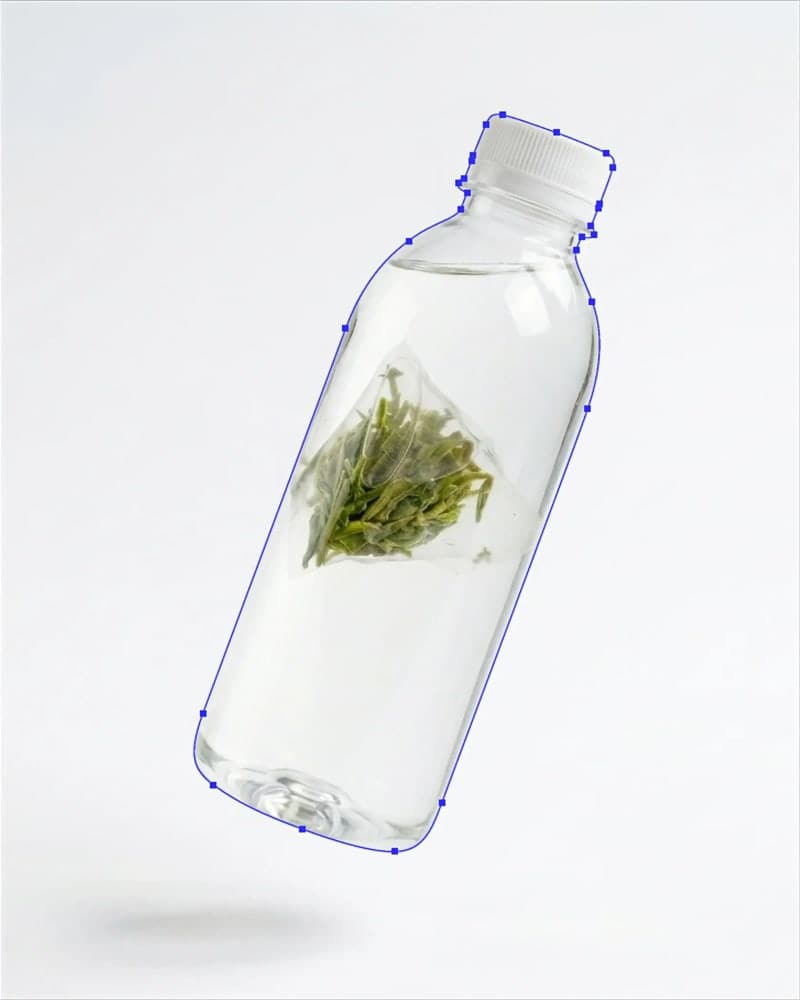
│ 3. Transparent Glass / Perfume Bottle (Refraction & natural shadows)   │
│ 4. Complex Wire Spoke Bicycle / Mesh (100+ internal cutout windows)    │
│ 5. White Apparel on Off-White Background (Near-zero edge contrast)    │
└────────────────────────────────────────────────────────────────────────┘
Clipping Path on your own images
Hand-drawn vector paths.
The Technical Inspection Rubric (200% Zoom Check):
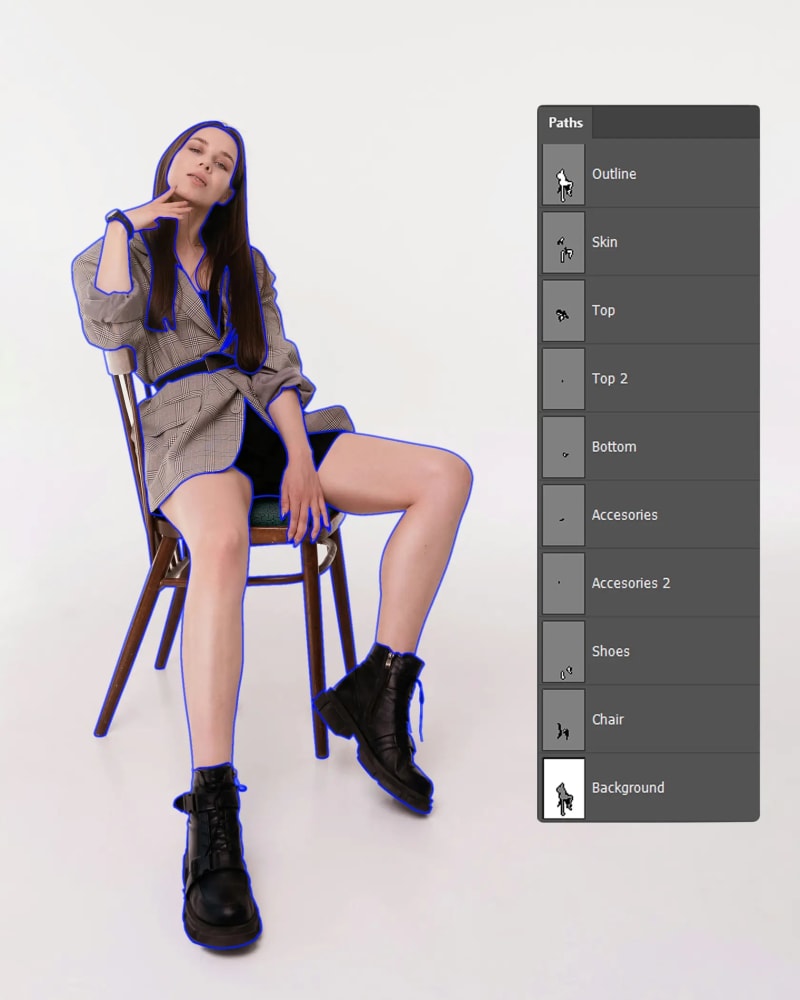
- Node Density & Smoothness: Inspect the vector path in Photoshop's Paths palette. Professional retouchers use clean, sweeping Bezier curves with minimal anchor nodes. An amateur path contains hundreds of erratic, jagged corner nodes.
- Path Inset Tolerance: The clipping path should sit exactly 0.5 pixels inside the product edge. Placing the path outside captures background color bleed; placing it too far inside clips off fabric texture and sharp product corners.
- Hole / Window Masking: Check internal cutouts (shoe eyelets, bag handles, bicycle spokes). Unqualified vendors frequently miss interior negative-space holes.
- Natural Shadow Retention: Confirm whether original cast shadows were preserved on a transparent layer or replaced with unnatural, blurry Gaussian blurs.
Vendor RFP Scorecard Template
Score prospective vendors on a 100-point scale:
- Technical Quality Score (35 pts): Precision on the 5-image stress-test batch under 200% zoom.
- Turnaround Velocity & SLA (25 pts): Speed of test batch turnaround and contractual SLA terms.
- Security & Infrastructure (20 pts): Encryption, NDA compliance, and file transfer reliability.
- Pricing & Commercial Terms (20 pts): Transparent unit economics, revision policies, and billing terms.
A vendor must score 85 points or higher to be approved for live production volume.
About this guide
Written by the Reframe Visuals editors. Last reviewed July 16, 2026. See how we check our work.
Questions answered
3 questions
AI models predict edges based on pixel contrast. When product edges blend into background tones (e.g., white sneakers on light grey seamless paper), AI creates fuzzy, stepped, or inaccurate edges that ruin catalog presentation. Hand-drawn Pen Tool vector paths follow physical product contours with microscopic precision.
Submit between 5 and 10 representative images spanning your easiest and most complex product categories. Reputable enterprise studios provide these sample edits free of charge within 24 hours to prove their capabilities.
Standard commercial terms are Net 30 or Net 15 billing upon delivery and client QA approval, backed by a monthly statement of account. Avoid vendors requiring upfront prepaid tokens for large enterprise volumes.
No matching questions
Try a shorter keyword, or choose another category.